



EDUCATIONAL FORUM
Customs Offices
Nassau
The Bahamas Customs Department
P. O. Box N 155
Nassau
New Providence
The Bahamas
Location – Headquarters – University Drive
Opening Hours: 9:00 am to 4:00 pm, Monday to Friday.
Tel. (242)604-3124, 604-3125
Fax. (242)325-7409
Email: customs@bahamas.gov.bs
Sections
Abaco
Bahamas Customs
P.O. Box - AB-20178
Andros
Bimini
Chubb Cay/Berry Island
Cat Island
Eleuthera
Exuma
Berry Islands
Inagua Email:
Long Island (Stella Maris)
San Salvador
Grand Bahama
P.O. Box F-42484
C.A. Smith Complex
East Mall Drive
Old Bahama Bay
- Administration – responsible for human resources, accounts and training.
- Airport – passenger/cargo airlines
- Bonded Matters– responsible for bonded goods, goods under concession, bonds and temporary imports.
- Commonwealth Brewery – responsible for manufacturing of beverages.
- Entry Checking Section– responsible for processing of documents entering and leaving.
- Examinations Section– responsible for examination of direct delivery (containers).
- Intelligence Section– deals with risk management.
- Information Technology Unit - responsible for the department’s IT services
- Internal Audit – responsible for all audits done internally
- PCA-Post Clearance Audit – deals with post audits of declarations submitted.
- Marine Unit– deals with the patrolling of waterways and marinas.
- Canine Unit - deals with searching for contraband within shipments.
- Investigation Section – is concerned with fraud and falsification of documents.
- Queries and Refunds Section – is concerned with over / underpayment of customs duty.
- Temporary Imports – responsible for all cargo entered on a temporary basis that is going to be re-exported
- Docks – clearing inward and outwards of cargo vessels
- Parcel Post– deals with the clearing of small packages at Post Office
- Rules of Origin– deals with preferential rates from the EPA agreement
- Releasing – deals with the releasing of completed cargo
- Revenue Recovery Unit– Collections Department
- Manifest Control/Warehouse – deals with warehousing of unentered goods
- Tax Compliance – deals with the verification of approval of all Tax Compliances
- Tariff Matters – deals with HS Codes verification and rulings
- Training – mandated to train all with up to date technology and practices
- Archives – storage of completed documents
- Procurements & Logistics – purchasing department
- Valuation Section – Verification of value / prices of goods.
- Comptroller of Customs
- Deputy Comptroller Customs
- Assistant Comptroller of Customs
- Superintendent of Customs
- Chief Customs Officer
- Senior Customs Officer
- Chief Customs Guard
- Customs Officer Grade I
- Customs Officer Grade II
- Senior Customs Guard
- Trainee Customs Officer
- Customs Guard
Key Contact Persons (complete list of persons)
Ms. Geannie Moss – Comptroller of Customs – geanninemoss@bahamas.gov.bs
Mr. Roosevelt Bethell – Deputy Comptroller – rooseveltbethel@bahamas.gov.bs
Ms. Carla Bain – Superintendent
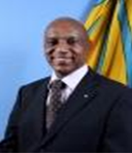
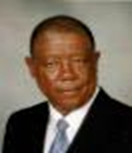
Former Comptrollers
Revenue Collection
The Bahamas has been a member of the World Customs Organization since August 16, 1974. Since becoming a member of the organization the country of benefited from technical expertise and advice from the organization.
The World Customs Organization (WCO), established in 1952 as the Customs Co-operation Council (CCC) is an independent intergovernmental body whose mission is to enhance the effectiveness and efficiency of Customs administrations.
Today, the WCO represents 182 Customs administrations across the globe that collectively process approximately 98% of world trade. As the global centre of Customs expertise, the WCO is the only international organization with competence in Customs matters and can rightly call itself the voice of the international Customs community.
The WCO’s governing body – the Council – relies on the competence and skills of a Secretariat and a range of technical and advisory committees to accomplish its mission. The Secretariat comprises over 100 international officials, technical experts and support staff of some nationalities.
As a forum for dialogue and exchange of experiences between national Customs delegates, the WCO offers its Members a range of Conventions and other international instruments, as well as technical assistance and training services provided either directly by the Secretariat, or with its participation. The Secretariat also actively supports its Members in their endeavours to modernize and build capacity within their national Customs administrations.
Besides the vital role played by the WCO in stimulating the growth of legitimate international trade, its efforts to combat fraudulent activities are also recognized internationally. The partnership approach championed by the WCO is one of the keys to building bridges between Customs administrations and their partners. By promoting the emergence of an honest, transparent and predictable Customs environment, the WCO directly contributes to the economic and social well-being of its Members.
Finally, in an international environment characterized by instability and the ever-present threat of terrorist activity, the WCO’s mission to enhance the protection of society and the national territory, and to secure and facilitate international trade, takes on its full meaning.
Excerpt from www.wcoomd.org/en/about-us/what-is-the-wco.aspx
The Bahamas obtained observer status to get acquainted with the WTO and its workings in 2000. By becoming an observer it allowed The Bahamas to become acquainted with the rules and procedures of the World Trade Organization. In 2001 an application was made to apply for full membership. There was a delay in the accession process however in 2017 the country has resume its membership application by fulling the necessary.
The World Trade Organization — the WTO — is the international organization whose primary purpose is to open trade for the benefit of all. There are a number of ways of looking at the World Trade Organization. It is an organization for trade opening. It is a forum for governments to negotiate trade agreements. The WTO can –
1 ... cut living costs and raise living standards
2 ... settle disputes and reduce trade tensions
3 ... stimulate economic growth and employment
4 ... cut the cost of doing business internationally
5 ... encourage good governance
6 ... help countries develop
7 ... give the weak a stronger voice
8 ... support the environment and health
9 ... contribute to peace and stability
10 ... be effective without hitting the headlines
It is a place for countries to settle trade disputes. It operates a system of trade rules. Essentially, the WTO is a place where member governments try to sort out the trade problems they face with each other.
The WTO is run by its member governments. All major decisions are made by the membership as a whole, either by ministers (who usually meet at least once every two years) or by their ambassadors or delegates (who meet regularly in Geneva). The WTO agreements are lengthy and complex because they are legal texts covering a wide range of activities. But a number of simple, fundamental principles run throughout all of these documents. These principles are the foundation of the multilateral trading system.
The WTO agreements cover goods, services and intellectual property. They spell out the principles of liberalization, and the permitted exceptions. They include individual countries’ commitments to lower customs tariffs and other trade barriers, and to open and keep open services markets. They set procedures for settling disputes. These agreements are not static; they are renegotiated from time to time and new agreements can be added to the package. Many are now being negotiated under the Doha Development Agenda, launched by WTO trade ministers in Doha, Qatar, in November 2001.
WTO agreements require governments to make their trade policies transparent by notifying the WTO about laws in force and measures adopted. Various WTO councils and committees seek to ensure that these requirements are being followed and that WTO agreements are being properly implemented.
The WTO’s procedure for resolving trade quarrels under the Dispute Settlement Understanding is vital for enforcing the rules and therefore for ensuring that trade flows smoothly. Countries bring disputes to the WTO if they think their rights under the agreements are being infringed. Judgements by specially appointed independent experts are based on interpretations of the agreements and individual countries’ commitments.
WTO agreements contain special provision for developing countries, including longer time periods to implement agreements and commitments, measures to increase their trading opportunities, and support to help them build their trade capacity, to handle disputes and to implement technical standards. The WTO organizes hundreds of technical cooperation missions to developing countries annually. It also holds numerous courses each year in Geneva for government officials. Aid for Trade aims to help developing countries develop the skills and infrastructure needed to expand their trade.
Excerpt from www.wto.org/english/thewto_e/whatis_e/what_we_do_e.htm
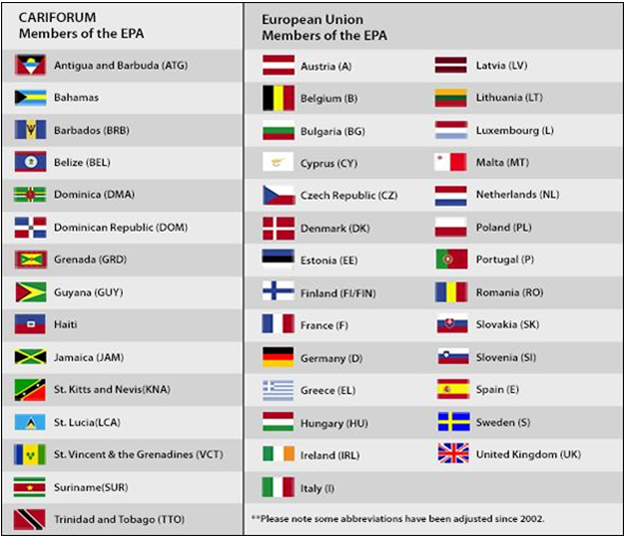
The Bahamas signed the EPA in October 2008. The EU and the signatory CARIFORUM States (including The Bahamas) have been provisionally applying the Agreement since 29th December 2008; however, it came into effect on 1st July, 2013.
Under the EPA, importers can take advantage of preferential tariff rates on product originating out of the EU, and CARIFORUM countries. The implementation of an EPA tariff was specifically designed to reduce tariffs progressively over a period extending to 25 years, at which time duties are expected to be completely eliminated.
Traders wishing to take advantage of the reduced rates, must have their goods accompanied by the certificate of origin/EUR.1 form
Economic Partnership Agreement (EPA)
- The Economic Partnership Agreement (EPA) entered into between the CARIFORUM States and the European Union (EU) and its member States provides, inter alia, for a trade partnership between the Signatory States aimed at the expansion of their trade and, from the particular standpoint of the CARIFORUM States, promoting the economic development of these States. The Agreement recognizes the on-going commitment of the CARIFORUM States to the furtherance of their development through the regional and sub-regional integration initiatives upon which they are embarked. These initiatives are an essential link in the strategy, to be enhanced by the EPA, toward their greater participation in world trade.
- The EPA creates a reciprocal preferential trade arrangement tailored to the emerging trade relations of the CARIFORUM States and the EU Member States. The market access arrangement provide for the immediate duty-free and quota free entry into the markets of the EU member States of goods originating in CARIFORUM States. Reflecting the unequal levels of development of the Member States of the EU on the one hand and the CARIFORUM States on the other, the Agreement prescribes an asymmetrical and more measured rate of liberalization of access “goods originating” refers to products which meet the qualifying criteria set down in the rules of origin prescribed under the Agreement. The EPA rules of origin, which are to be found in Protocol 1, which is an integral part of the Agreement, are examined in a separate publication.
- This publication explains the nature and scope of the tariff liberalization provisions of the Agreement governing trade in goods between the CARIFORUM states and the Member States of the EU. It describes the market liberalization obligations of the Signatory States, with particular emphasis on the provision for the phased reduction by the CARIFORUM States of customs duties applicable to imports of goods originating in the Member States of the EU.
- The CARIFORUM-EU EPA which was signed in October 2008 by fourteen CARIFORUM States and by the fifteenth CARIFORUM State, Haiti, in December 2009 has been provisionally applied since 29th December 2008.
- Some goods are entirely excluded from the trade liberalization regime. Among the excluded goods are a range of products of the agriculture sector, examples of which are mean and fish products, tomatoes and cucumbers, bananas and plantains, mangoes, pineapples, citrus fruit, fruit juices, tomato ketchup; and aerated and alcoholic beverages. Other products excluded from market access liberalization include non-electric water heaters (other than gas-operated), refrigerators and freezers, and gold jewelry. For some goods, CARIFORUM States have agreed to apply zero rates. In many cases, zero rates apply to gods from all sources, but for some additional goods zero rates are also applied where those goods are traded under the EPA.
- The Customs duties on all other goods imported by CARIFORUM States the EPA will be subject to phased reduction.
- The EPA defines customs duty as any duty or charge of any kind, including any form of surtax or surcharge, imposed in connection with importation or exportation of goods. This definition, which effectively captures all border taxes, excludes the following –
- Internal taxes or other internal charges where these are also applied on like domestic products and are not in excess of those taxes or charges applied to domestic products;
- Fees or other charges imposed for services rendered that are commensurate with the cost of such services; and
- Anti-dumping and countervailing duties and tariff-based safeguard measures implemented in the special circumstances of trade defence action.
(Excerpt taken from CARIFOM EPA Brouchure)
All News

BAHAMAS’ DELEGATION AT 61ST CARIBBEAN FINANCIAL TASK FORCE 61ST PLENARY MEETING IN BRIDGETOWN, BARBADOS, ON THURSDAY, 27TH NOVEMBER, 2025!
Customs/Revenue Superintendent Dellarese Hinsey joins colleagues as part of The Bahamas’ delegation attending the […]
Customs Team Brings Energy and Unity to the 2025 BLECCU Track and Field Meet
The Bahamas Customs and Excise Department enjoyed a full day of camaraderie and competition […]